

_Municipal_Seal.png&w=64&q=75 "Municipality of New Lucena, Iloilo")
The Physics of Effort: Work in the Cry of Jelicuon
W = F × d.In everyday language, 'work' means any effort. In physics, work has a precise meaning: work is done when a force moves an object through a distance in the direction of that force. The formula is simply W = F × d — multiply the force applied by the distance the object moves.
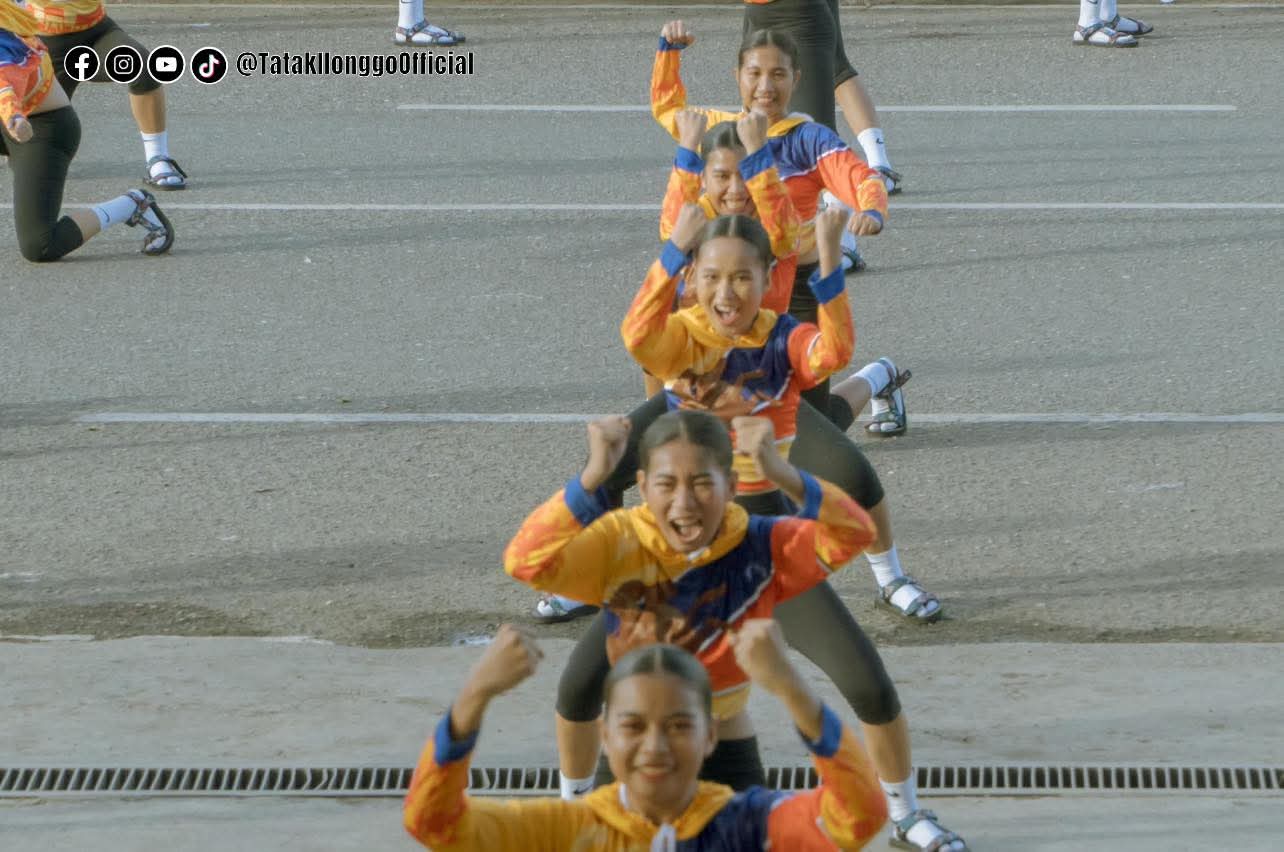
During the Cry of Jelicuon, performers do enormous amounts of physical work — pushing, carrying, lifting, and moving props all involve applying force over a distance. But physics reveals a surprising truth: a performer holding a 10 kg prop motionless above their head, no matter how exhausting, does zero mechanical work on the prop — because the distance moved is zero.
Work is done when a performer lifts a prop from the floor to their shoulder (force upward, motion upward), or when teachers push risers across the venue floor (force forward, motion forward). In both cases, the force and the motion are in the same direction — so the full force does useful work.
W = F × d. Multiply it by a hundred bodies and you have the festival's real energy budget.Hauling the War-Scene Props: Force Over a Distance
One of the clearest examples of mechanical work in the Cry of Jelicuon happens behind the war-scene choreography: the propsmen move heavy loaded props — risers, cannon mock-ups, and prop carts — into position across the venue floor. A propsman who pushes a prop cart forward applies a force in the same direction the cart travels, so the work is simply the force multiplied by the distance covered: W = F × d. The harder they push and the farther the prop goes, the more work they do. To keep the effort efficient, the crew pushes straight in the direction they want the prop to move — every newton of that push helps move the load.
W = F × dW = 80 × 15W = 1200 JA crew member pushes a riser forward with a steady 80 N over 15 m. Because the push is in the same direction as the motion, all of it counts as useful work: W = 1200 J.
Before the Festival: Work in Every Warm-Up

Mechanical work is not limited to moving props. Before the festival, performers warm up with push-ups and jumps. When performers lift their bodies during push-ups or propel themselves upward during jumps, they perform mechanical work because a force is applied to move their body's center of mass over a distance. During these activities, chemical energy stored in the body is transformed into the mechanical energy that enables motion.
Try It Yourself
Now you try: a stagehand pushes a prop cart 5 m across the stage with a steady 40 N force in the direction of motion. How much work is done?
F = 40 N, d = 5 m