

_Municipal_Seal.png&w=64&q=75 "Municipality of New Lucena, Iloilo")
After the Revolt: How an Exhausted Body Cools Down

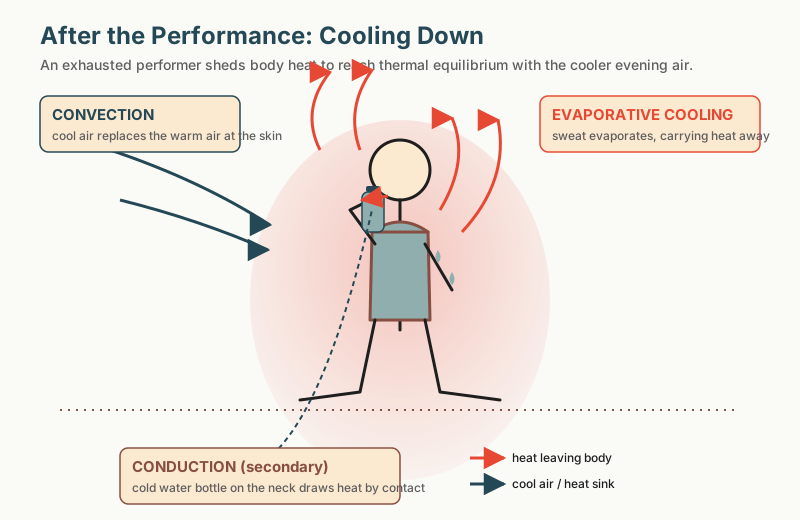
The performance ends and the crowd applauds — but for a Cry of Jelicuon performer, the most physically important moment begins now. The teachers and trainers move in to monitor the troupe: who is dizzy, who is exhausted, who is sweating heavily? After the performance, exhausted performers must cool down so their body temperature returns to normal. This recovery is pure physics. The body sheds its built-up heat mainly by **convection** — cooler moving air replacing the warm air at the skin — and by **evaporative cooling**, as sweat evaporating carries heat away. Understanding how heat leaves the body is exactly what competency S7FE-IVb-5 asks us to explain.
Heat is energy that flows from a hotter object to a cooler one. It always moves in that one direction — never from cold to hot on its own. During the reenactment, the performers' muscles turned chemical energy into motion and a large amount of waste heat, pushing body temperature above its normal 37°C. To recover, that extra heat has to be transferred out of the body and into the surroundings. There are three mechanisms by which this happens: convection, conduction, and radiation — with evaporative cooling working alongside convection to speed things up.
Convection: Cooler Air Carries the Heat Away
Convection is heat transfer through the movement of a fluid — and air is a fluid. When a hot, sweating performer stands still, the air touching their skin warms up and forms a thin warm layer. As soon as that warm air drifts away and cooler air moves in to replace it, heat is carried off with the departing air. This constant exchange of warm-air-out, cool-air-in is convection, and it is the body's main way of dumping heat after the show.
This is why the trainer's first instructions are about moving air. Performers are told to keep walking slowly during cool-down rather than collapsing in place — moving the body stirs the air and keeps replacing the warm layer with cooler air. A handheld fan, an electric fan, or simply standing where a breeze passes through the gym all do the same job: they speed up convection by sweeping the warm air off the skin faster. The faster cool air replaces warm air, the faster the body cools.
Evaporative Cooling: How Sweat Removes Heat
The body's most powerful cooling tool after a hard performance is sweat. Evaporative cooling works like this: to change sweat from a liquid into a vapor, energy is needed — and that energy is taken as heat directly from the warm skin. As each drop of sweat evaporates, it carries that heat away with it, leaving the skin cooler. This is thermoregulation — the body's automatic system for holding its temperature steady. The cooler moving air of convection then sweeps the warm, moist vapor away, which is why convection and evaporation work best together.
This also explains a familiar festival experience: a sweating performer feels a sudden chill the moment they step in front of a fan or into a breeze. The moving air evaporates the sweat much faster, so heat is pulled from the skin all at once. It is also why fanning a dizzy performer helps them recover — it boosts both convection and evaporative cooling at the same time. (Note: evaporation is not a separate fourth 'mechanism' of heat transfer; it removes heat from the skin and then hands that heat to the moving air, which carries it off by convection.)
Conduction: The Cold Bottle on the Neck
A second, more direct way to cool down is conduction — heat transfer through direct contact between objects at different temperatures. When a performer presses a cold water bottle against their warm neck, or sits down on the cool gymnasium floor, heat flows straight out of their warm body and into the cooler object that is touching it. No air movement is needed; the two surfaces simply touch, and heat marches from the hotter one to the cooler one.
There is also a third mechanism, radiation — heat that travels as infrared waves through space without any contact or air movement. A warm performer radiates heat outward even while resting, and in a crowded gym after the show, many radiating bodies together can noticeably warm the room. Radiation matters, but for post-performance cool-down the body relies most on convection and evaporative cooling, with conduction as a handy quick fix.
Thermal Equilibrium: When Cooling Finally Stops
Heat does not flow forever. It only flows while there is a temperature difference — while the body is hotter than its surroundings. As a resting performer keeps losing heat to the cooler floor, the moving air, and the room, the gap between body temperature and surrounding temperature gets smaller and smaller. Heat transfer slows down as that gap shrinks.
Thermal equilibrium is reached when the performer's body and their surroundings settle to the same temperature — at that point there is no temperature difference left, so the net flow of heat stops. This is exactly the recovered state the trainers are watching for: the performer is no longer overheating, the heavy sweating has eased, and the body has returned to a comfortable, balanced temperature with the air around it. Cooling continues only until the body and its surroundings reach the same temperature — that balanced state is thermal equilibrium. Note that a small object exchanging heat with a much larger one (a performer against a huge gym floor) will end up very close to the floor's temperature, because the giant floor barely changes while the small contact patch on the body adjusts to match it.
ΔT = T_body − T_surroundings (heat flows hotter → cooler while ΔT > 0)ΔT = 39 °C − 28 °CΔT = 11 °C → heat flows OUT of the body into the airRight after the cry, the performer at 39 °C is hotter than the 28 °C gym air, so the 11 °C difference drives heat out of the body by convection and evaporative cooling. As the body cools, ΔT shrinks and the transfer slows down. It stops only when ΔT = 0 — when body and air reach the same temperature, which is thermal equilibrium. No specific-heat numbers are needed: the temperature difference alone tells us the direction of heat flow and when it ends.
Why the Trainer Is Right
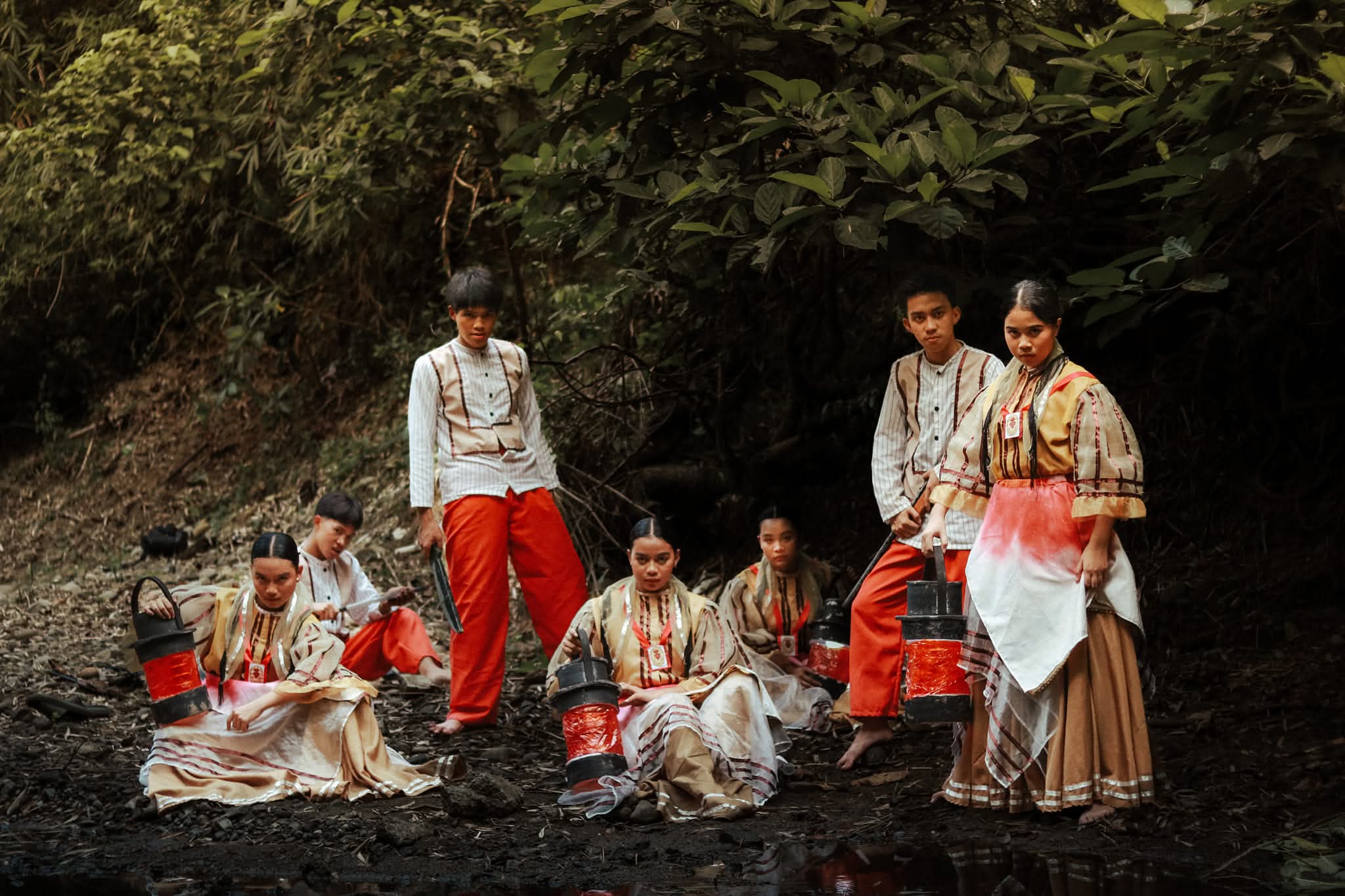
Putting it together explains every cool-down instruction the teachers give. Keep moving slowly — to keep cooler air replacing warm air at the skin (convection). Fan the dizzy performers — to boost both convection and evaporative cooling. Press a cold bottle to the neck or sit on the cool floor — for fast conduction. And the goal of all of it is the same: help the exhausted body shed its excess heat and return to thermal equilibrium with its surroundings, safely and without anyone fainting. That is the physics of recovery after the Cry of Jelicuon.