

_Municipal_Seal.png&w=64&q=75 "Municipality of New Lucena, Iloilo")
The Heartbeat of the Festival
The rhythmic cadence of marching bands during the Cry of Jelicuon sets the tempo for the entire parade. When a drum skin is struck, it vibrates rapidly back and forth, pushing against adjacent air molecules and creating a sound wave that travels across the town plaza.
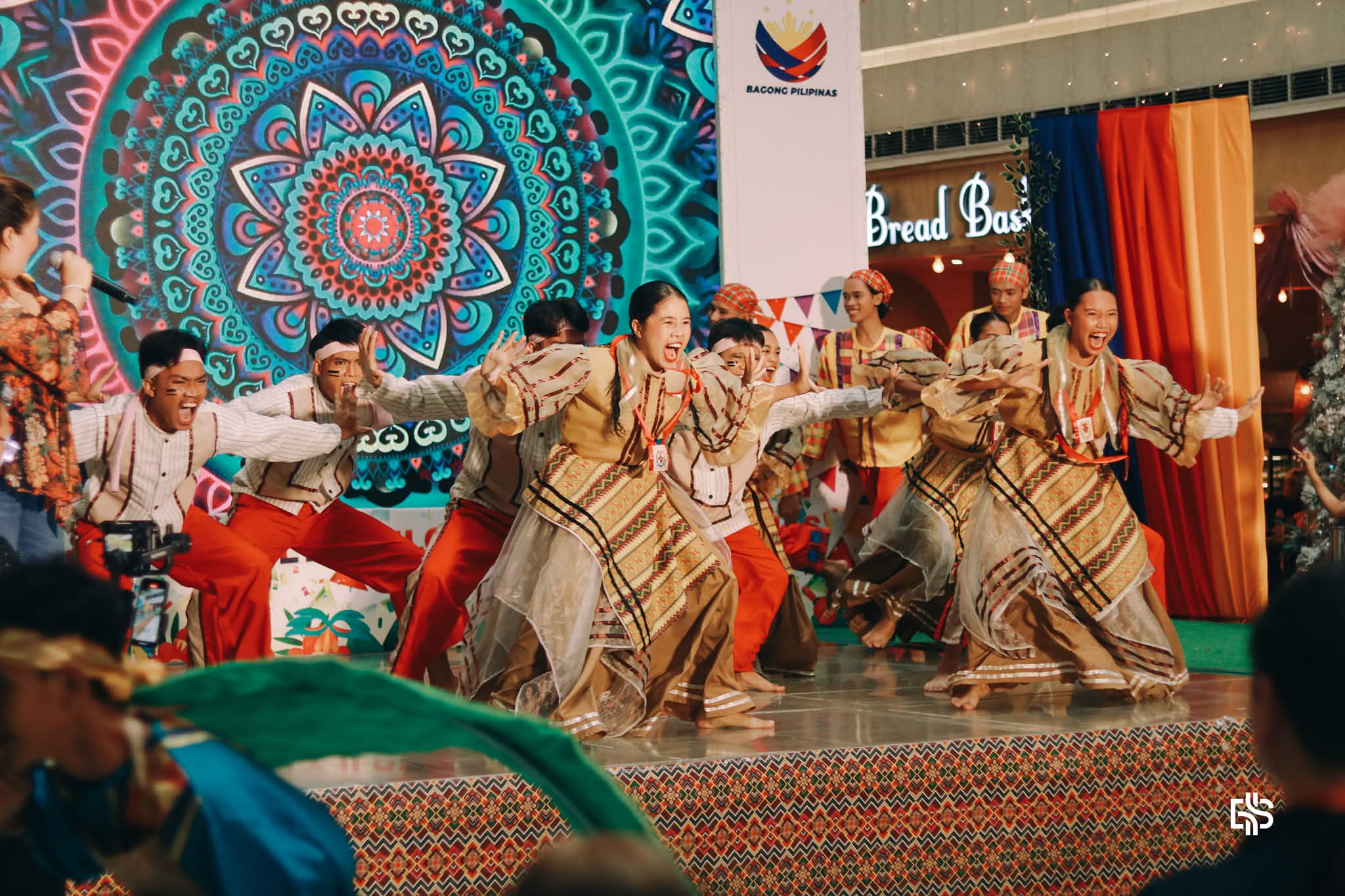
Before the Performance: Rehearsing the Sound
Weeks before the Cry of Jelicuon, the student band rehearses the musical score alongside the dancers. During these rehearsals, performers train themselves to recognize specific sound cues — a high-frequency trumpet blast signals the entrance of the revolt leaders; a low-frequency drum roll signals the Spanish soldiers advancing. This conditioning is possible because frequency is a reliable, consistent property: a trumpet tuned to 440 Hz produces the same pitch in rehearsal and on performance day. The wave equation v = fλ holds in any environment — same speed of sound, same frequency, same wavelength. This consistency is what makes music a dependable choreographic tool.
The relationship connecting wave speed (v), frequency (f), and wavelength (λ) is given by the universal wave equation: v = fλ. In a given medium like air at room temperature, all sound waves travel at roughly the same speed (approx. 343 m/s).
λ = v / fλ = 343 / 200λ ≈ 1.72 mA festival snare drum striking at 200 Hz sends out sound waves about 1.72 m long — roughly the height of a performer. Raise the pitch and the wavelength shrinks, because v = fλ keeps their product fixed at the speed of sound.
Try It Yourself
Now you try: the festival trumpet plays a note at 440 Hz. Using the same wave speed, what is its wavelength? Work it out in your journal, then check.
v = 343 m/s, f = 440 Hz
Amplitude as a Choreographic Signal
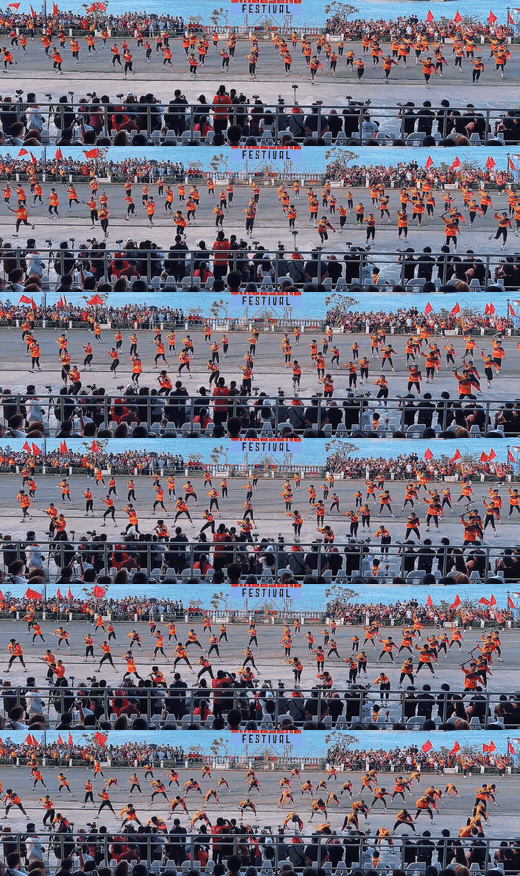
During the Cry of Jelicuon performance, it is not only frequency that guides the performers — amplitude plays an equally important role. Louder sections of the music, which correspond to greater amplitude, signal climactic moments in the reenactment. At these moments, performers respond by executing stronger, more exaggerated movements, filling the performance area more aggressively. Conversely, lower amplitude sections signal a reduction in energy, cueing the graceful and subtle swaying movements associated with daily-life scenes. The contrast between high and low amplitude creates the emotional arc of the entire performance, guiding performers between the revolution's quiet tensions and its explosive confrontations.
After the Performance: Protecting the Instruments
Once the Cry of Jelicuon ends, musical instruments are collected, checked, and stored for the following year. Proper storage matters because vibration and resonance are not just performance phenomena — they are ongoing physical properties of every instrument. Wooden drum shells and brass horns are sensitive to humidity and temperature changes, which alter the tension of membranes and the shape of resonating chambers, shifting the instrument's natural frequency. Festival organizers store instruments in dry, cool conditions to preserve their tuning and ensure the same frequencies are reproducible next year — an application of wave physics in resource management.