

_Municipal_Seal.png&w=64&q=75 "Municipality of New Lucena, Iloilo")
Why the Choreographer Always Says Both 'How Fast' and 'Where'
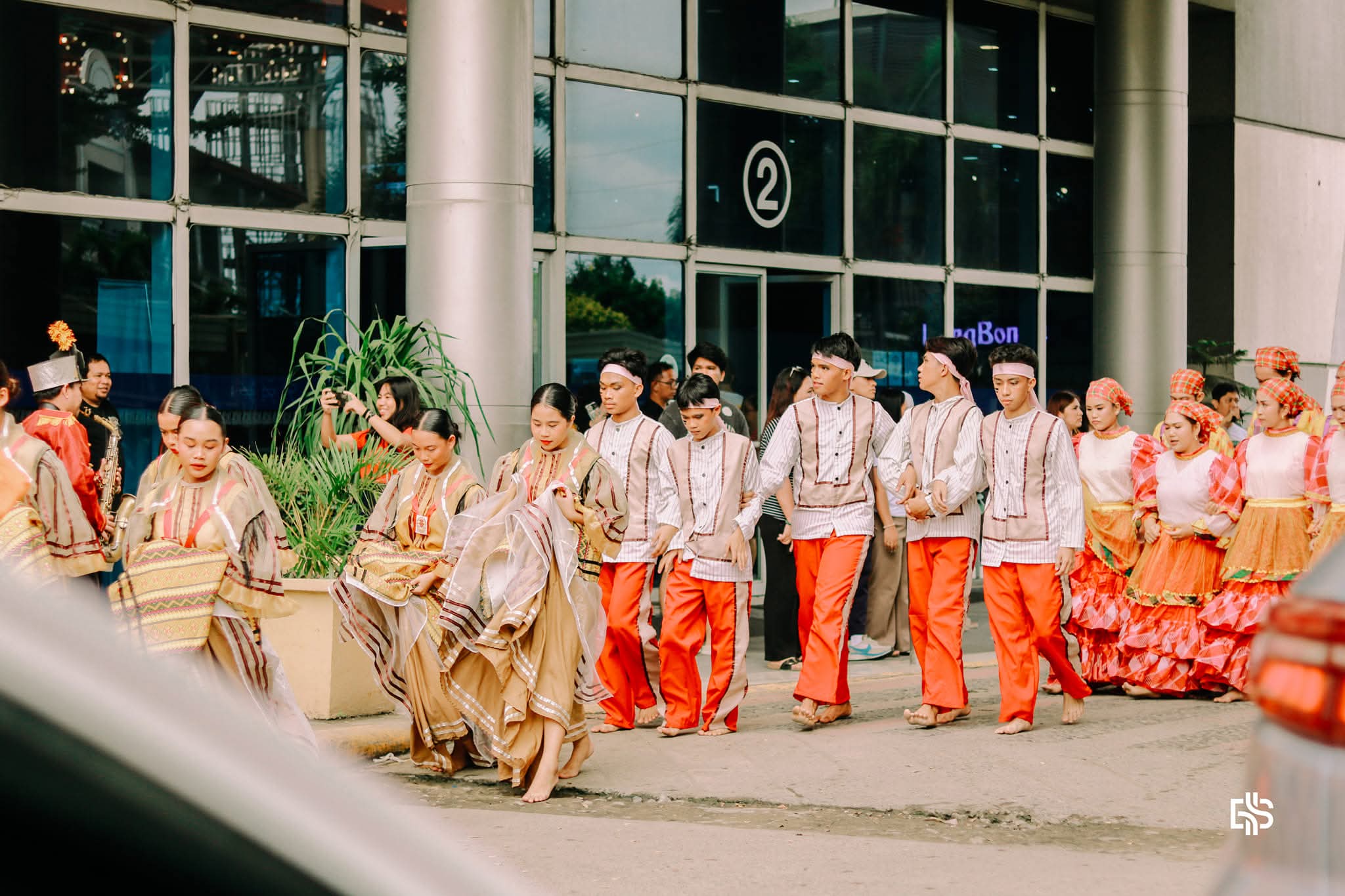
In the Cry of Jelicuon war reenactment, the choreographer does not simply say 'run fast.' Every movement is a precise instruction: 'From position A, move toward stage-right at this pace for exactly 4 beats.' This is because motion in a performance requires both speed and direction — together, these define velocity.
Speed is the rate at which distance is covered — a scalar quantity with only magnitude, found from speed = distance / time. If a performer covers 8 meters in 2 seconds, their speed is 4 m/s. Velocity, however, adds direction: 4 m/s toward stage-right. One word changes everything — a performer moving 4 m/s to the right and another moving 4 m/s to the left have the same speed but opposite velocities.
Let's work a real festival problem. During the Cry of Jelicuon reenactment, Joseph — a performer carrying a wooden rifle — runs from the top of the riser to the center of the performance area, a distance of 20 meters, arriving in 4 seconds. What is his speed? Follow the given → formula → substitution → answer steps below; you can reuse this exact pattern for any speed problem.
speed = distance / timespeed = 20 m / 4 sspeed = 5 m/sJoseph runs the 20 m from the riser to center stage in 4 s, so his average speed is 5 m/s — roughly a fast jog. Adding the direction, 'toward center stage,' turns this speed into a velocity.
Try It Yourself
Now you try: a flag bearer marches 60 m straight down the parade route in 30 s. What is the average speed?
d = 60 m, t = 30 s
In the festival, this distinction matters for safety: when risers are moving on stage during the performance, performers must know the riser's speed AND its direction to avoid being hit. A riser rolling toward you requires a very different response than one rolling away.
Fight Scene Velocity: Rapid Changes in Direction
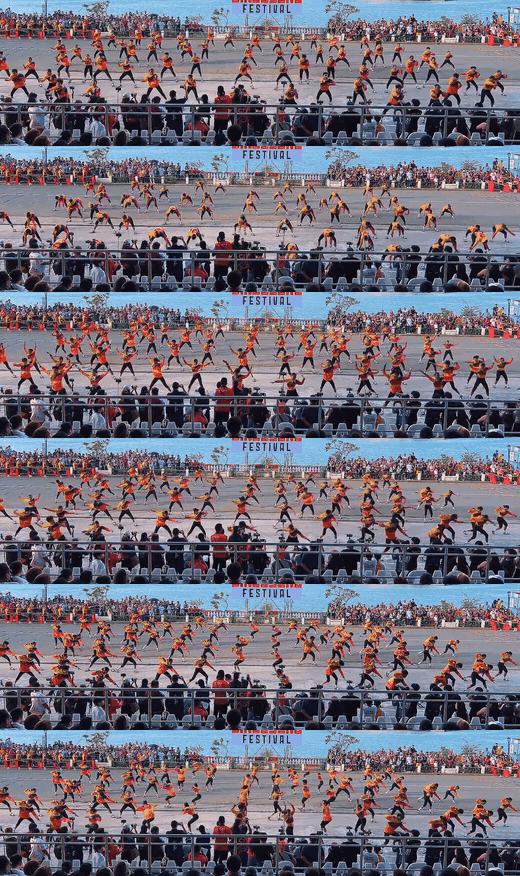
Male performers in the war reenactment execute strong, aggressive movements — running toward an opponent, then reversing sharply to evade. Even if a performer's speed stays constant at 4 m/s, reversing direction produces a completely different velocity. This is why the choreographer specifies not just 'how fast' but 'which way' for every beat of the fight scene. Non-uniform motion — where performers adjust both speed and direction to maintain synchronization — is a defining feature of the Cry of Jelicuon's most dramatic sequences.
Look closely at even a single running performer and the motion is never perfectly smooth. Each time a foot strikes the ground and pushes off, the performer applies a force that creates a brief burst of horizontal acceleration. Because this happens at every step, the running is not one steady acceleration but a rhythmic cycle of speeding up and slightly slowing down — a clear, everyday example of non-uniform motion on the Cry of Jelicuon stage.